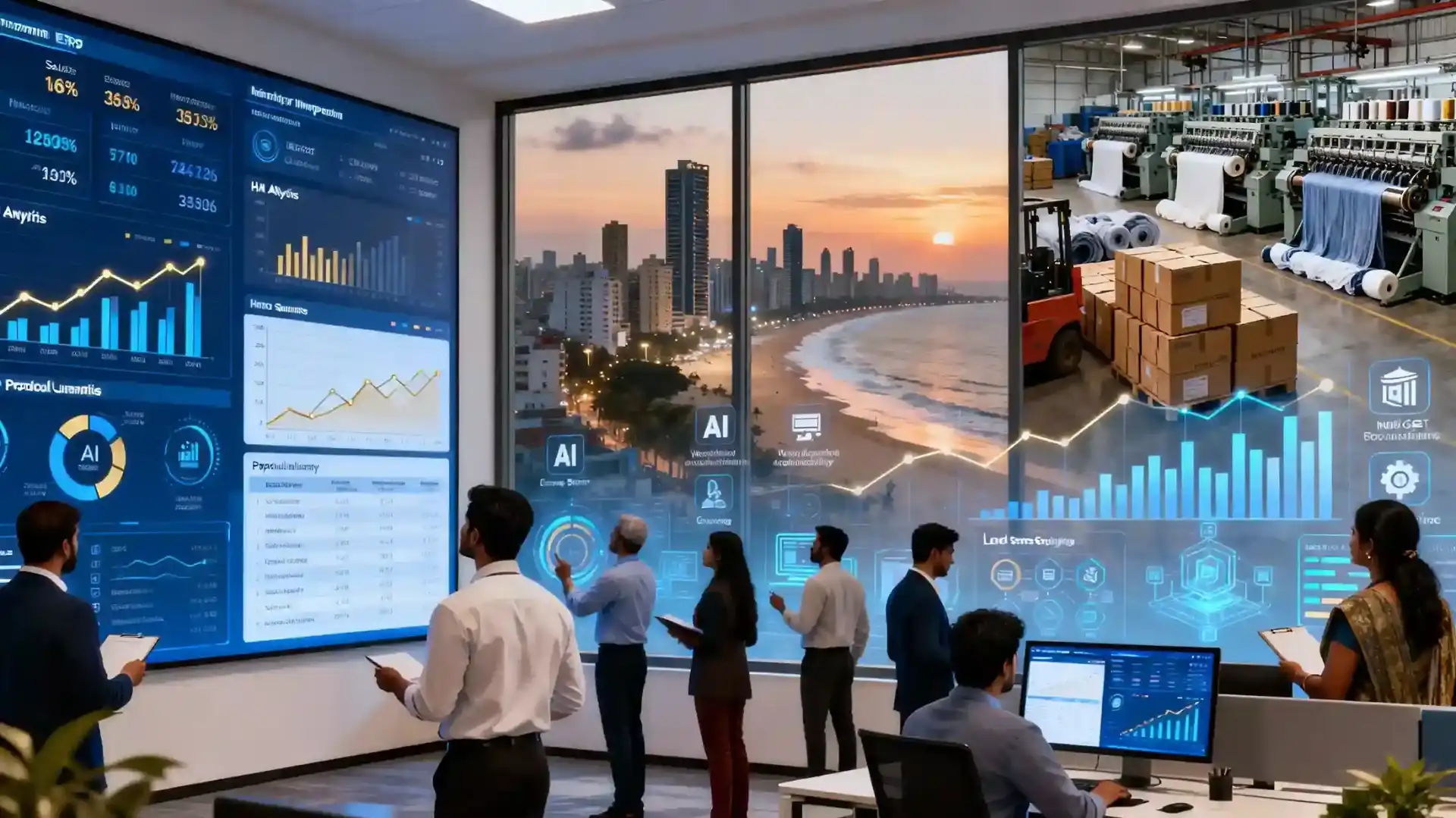
Comprehensive modules designed to streamline every aspect of your enterprise operations
Industry-ready for:
Industry-ready for IT, Manufacturing, Construction, Trading, Retail,
Healthcare, Logistics, Real Estate, Industrial Suppliers, and Service Businesses.
Sales. HR. Payroll. Inventory. Finance. Manufacturing. Projects. Management. All connected in one intelligent system.
Let teams work smarter.
Let operations run seamlessly.
Let technology handle complexity โ while you focus on growth.
Choosing the right system starts with understanding your business requirements rather than software features. Identify gaps in areas such as sales, inventory, finance, HR, or manufacturing. Select a solution that supports Indian compliance standards, fits Chennai business workflows, and can be customized easily. The system should be scalable and supported by a dependable local implementation team so it grows along with your business.
ERP and CRM software improve efficiency by automating routine tasks like data entry, approvals, follow-ups, and reporting. Since all departments use a single system, information moves faster and errors are reduced. Real-time dashboards give management clear visibility into operations, enabling quicker decisions, smoother coordination, and better control over business processes.
ERP/CRM software is a unified business management platform that connects key functions across an organization. ERP handles internal processes such as accounting, inventory, production, HR, and projects, while CRM focuses on managing customers, sales activities, and service interactions. Together, they create a centralized system where data is shared across teams, improving transparency and collaboration.
ERP software pricing varies based on the number of users, selected modules, customization needs, and deployment model. Some solutions are subscription-based, while others involve a one-time license with implementation costs. For small and medium businesses in Chennai, pricing is usually flexible and scalable, allowing companies to start small and expand as needed. Long-term value and support are more important than just initial cost.
ERP implementation timelines depend on business size and complexity. A basic implementation can be completed within a few weeks, while a more customized setup may take several months. The process generally includes requirement analysis, system configuration, data migration, user training, and testing. Proper planning and active user involvement help ensure faster deployment and smooth adoption.